Corrosion tests for functional surfaces
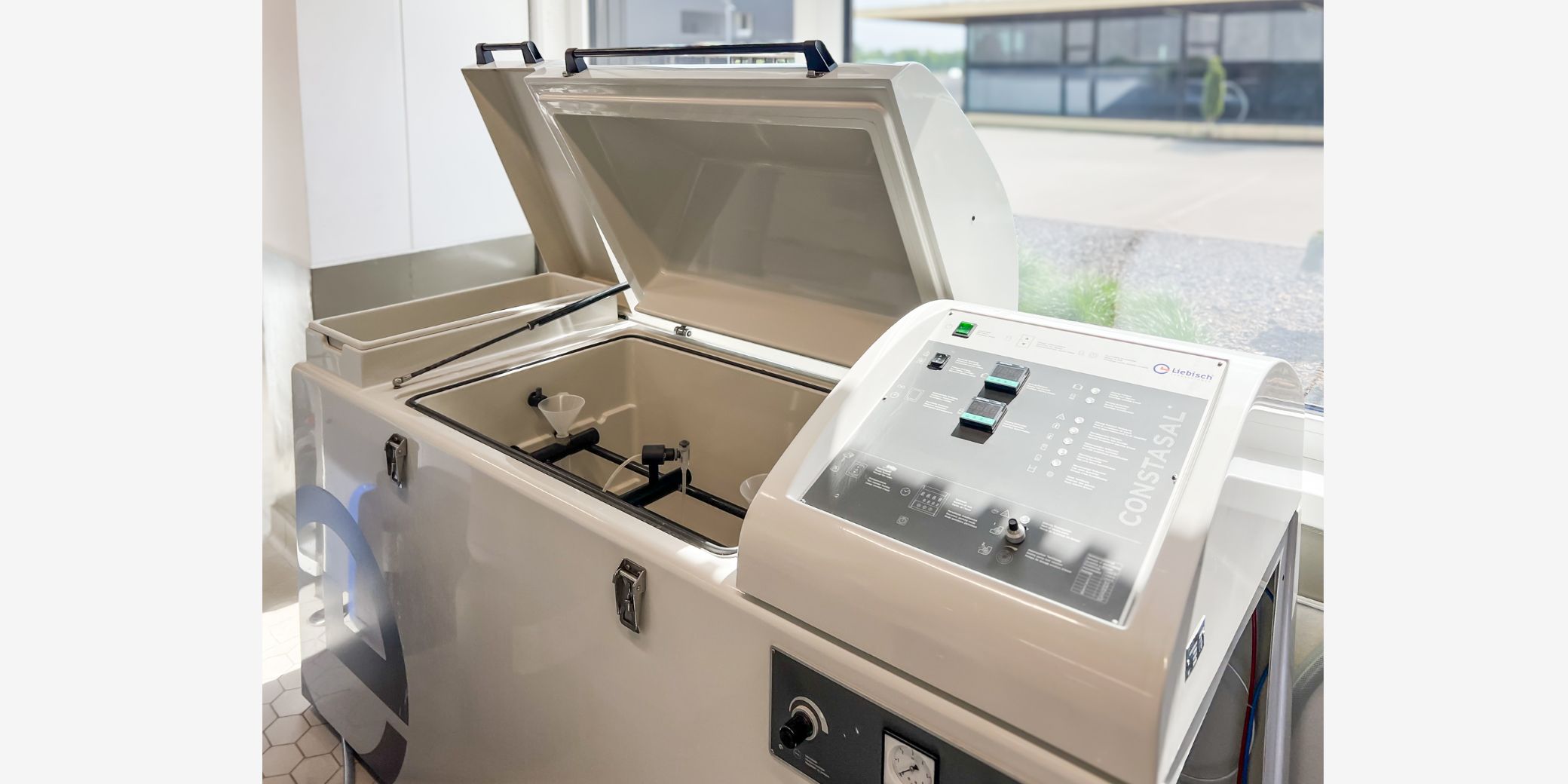
How the corrosion resistance of technical components can be assessed under realistic conditions.
Technical components must function reliably even under demanding environmental conditions. Moisture, salty atmospheres, condensation or corrosive media can significantly impair the surface – and thus the function, service life and appearance – of a component.
Targeted corrosion tests enable the resistance of electroplated coatings to be assessed under reproducible conditions. At IWG, we carry out, amongst other things, two key test procedures for technical components:
CASS test: Copper-accelerated salt spray test
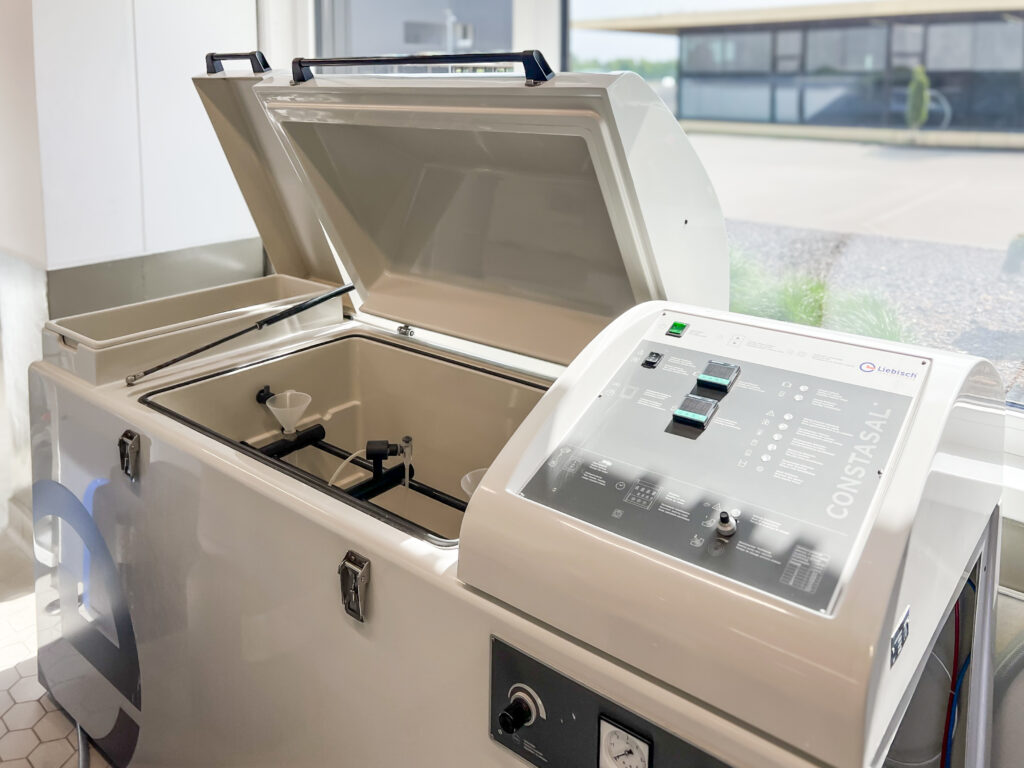
The CASS test (Copper-Accelerated Acetic Acid Salt Spray) is a particularly demanding salt spray test. The test atmosphere consists of an acidified sodium chloride solution containing copper(II) chloride. This significantly accelerates the rate of corrosion compared with a neutral salt spray test.
The method is used in particular to assess the corrosion resistance of metallic coatings and coating systems. Typical applications include, for example, coated technical components, automotive components or functional surfaces with high requirements for protective performance.
During the test, the components are exposed to a constant salt spray atmosphere for a defined period of time. This is followed by an assessment of any signs of corrosion, such as base metal corrosion, white rust, red rust, blistering or changes to the coating.
Condensation test: Resistance to high humidity
The condensation test simulates a persistently damp, condensing atmosphere. During the test, test specimens are exposed to high relative humidity and recurring condensation.
This test is particularly relevant for components that are regularly exposed to temperature fluctuations, high humidity or condensation during use. These include, amongst others, technical components in indoor environments, housings, fasteners and electronic components, as well as surfaces in industrial applications.
Unlike the salt spray test, the condensation test focuses not on salt exposure but on the coating’s resistance to moisture and condensation. This allows weaknesses such as pores, inadequate pre-treatment, adhesion problems or insufficient coating thickness to be identified at an early stage.
Test, evaluate, optimise
Corrosion tests provide a vital basis for the selection and optimisation of coating systems. They help to tailor surfaces specifically to their intended operating environment, ensure that quality requirements are met, and prevent potential failures as early as the development or series production phase.
At IWG, we carry out corrosion tests on technical components and decorative surfaces. Depending on your requirements, we can assist with selecting suitable test methods, conducting the tests and evaluating the results.
Would you like to have the corrosion resistance of your components tested?
Our team at IWG Lab Solutions will be happy to help you choose the right test method.